One room holds the whole session.
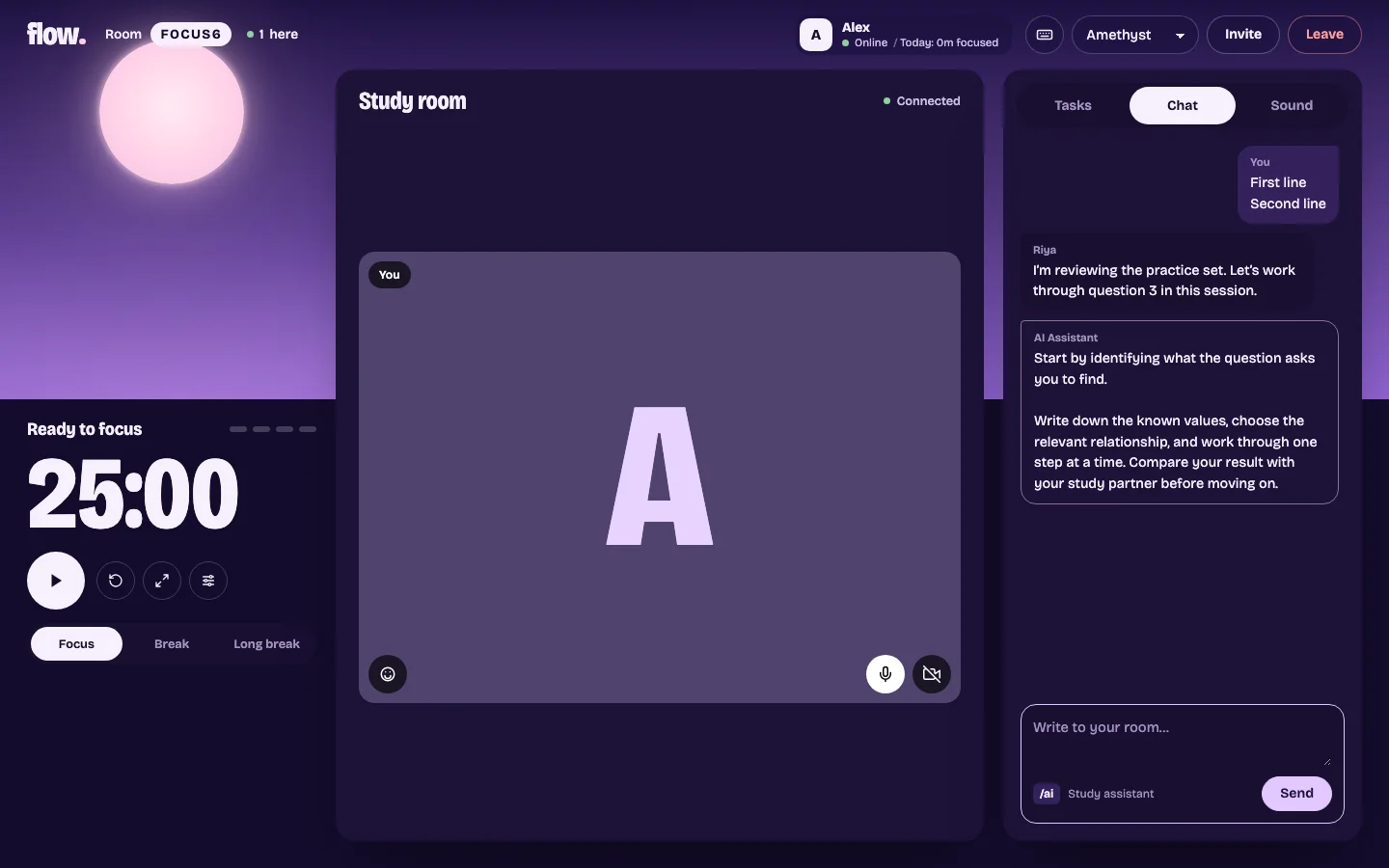
- One sun for everyone
- Start a focus block and the sun starts sinking for the whole room. When it sets, the room moves to a break, with a longer one after every fourth block.
- Your group on camera, encrypted
- Video and voice are encrypted and go directly between browsers over WebRTC. Flow’s servers never see or store them. Mute or turn the camera off whenever you like.
- A task list you finish together
- Add goals for the session, assign them to people, and watch the room’s progress fill in.
- Chat, with a study assistant
- Message the room, or start a message with /ai to ask a question without leaving.
- Sound for concentration
- Rain, ocean, a fireplace, wind, a quiet night. Share a YouTube or Spotify link when the room wants music.
- Open study groups
- List your room on the board and people studying the same thing can take a seat. Groups hold two to six.
From a link to your first focus block.
Create a room
You get a six-character code. Add a PIN if you want the room private.
Share the link
Your friends open it, sign in, and land in the same room.
Start the timer
Twenty-five minutes of focus, then a break. Change the lengths whenever you need to.
Pick your sky.
Ten skies, from a forest dusk to plain daylight. Choose one and this page changes with it. Your room will match.
Open source, start to finish.
Every line of Flow is public on GitHub. Read how it works, run your own copy, or fix something and send a pull request.
- Astro pages with strict TypeScript, and no client framework
- Supabase for sign-in, saved tasks, and realtime rooms
- Encrypted, peer-to-peer video and voice over WebRTC
- MIT licensed: use it, change it, host it yourself
- Checked in CI on Node 22, 24, and 26, PostgreSQL 17, and Chromium
$ git clone https://github.com/ManasDasri/Flow-study.git
$ cd Flow-study
$ npm ci
$ npm run dev:demo
dev:demo runs the whole app against a local stand-in for the backend, so you can explore a room offline.